

What is Melodrama?
If you have ever felt your heart race during an intensely emotional movie, gasped at an unexpected betrayal in a novel, or felt the raw swell of synth-pop music capturing late-night heartbreak, you have experienced the power of melodrama.
At its core, melodrama is a style of drama that exaggerates plot and characters to appeal directly to the audience’s emotions. Rather than relying solely on quiet, subtle psychological realism, a melodramatic narrative prioritizes heightened feeling, stark moral contrasts, high-stakes conflicts, and dramatic twists.
This genre is vital for readers, poets, authors, and screenwriters to grasp. Melodrama, far from being a mere synonym for “overacting,” is one of the most persistent and emotionally powerful narrative frameworks in literary and dramatic history. In this comprehensive reference, we will look at the definition, history, distinguishing characteristics, and modern applications of melodrama in literature, film, and contemporary society.
A classic depiction of 19th-century theatrical melodrama by Honoré Daumier, showcasing heightened emotional gestures.. Source: Wikipedia
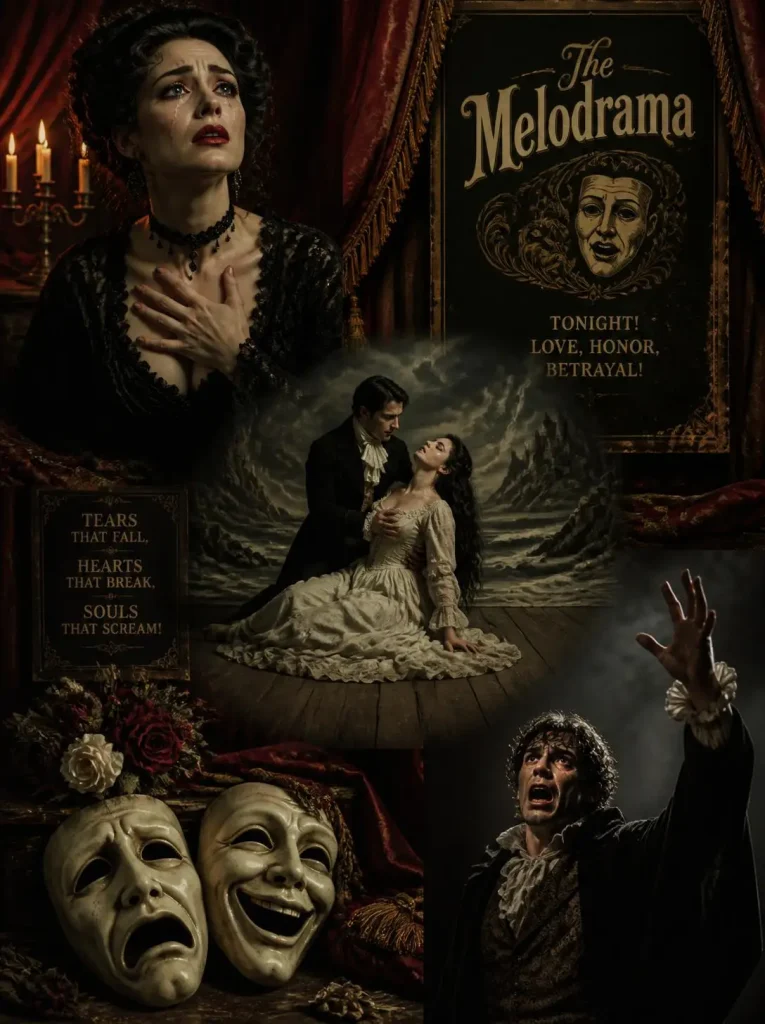
The Historical Evolution of Drama and Melodrama
To appreciate how melodrama functions today, we must look back at its origins. The term itself originates from the Greek word melos (meaning song or music) and the French word drame (meaning drama). Originally, it literally meant “a play with music.”
The Origins of Melodrama in the 18th Century
The roots of melodrama 18th century theater trace back to late 1700s Europe, particularly France and Germany. Playwrights like Jean-Jacques Rousseau experimented with monodramas spoken monologues set to orchestral scoring.
By the turn of the 19th century, French playwright René Charles Guilbert de Pixérécourt formalized the genre with plays like Cœlina (1800). Pixérécourt recognized that music could bypass intellectual skepticism and directly target the viewer’s emotional pulse.
Victorian Stage Spectacle and Dion Boucicault
Throughout the 19th century, melodrama became the dominant theatrical form across Great Britain and the United States. Victorian audiences craved sensational stagecraft: exploding steamboats, horse races, room fires, and dramatic train tracks.
One of the most legendary figures of this era was Irish playwright Dion Boucicault. His groundbreaking play, Boucicault’s The Octoroon (1859), tackled complex social themes surrounding race, slavery, and tragic romance in the American South. Boucicault blended technical stage wizardry with deeply emotional character arcs, establishing template tropes that would later transition into 20th-century cinema.
To learn more about the physical artifacts and set designs of early theater, you can explore the theatrical archives at the Victoria and Albert Museum, which maintains extensive historical records on Victorian stage productions.
You may also read: Famous Writers in UK: 25 Legendary Authors – Explore Now!
You may also like: Writing Elements: 10 Essential Basics You Must Know Today!
5 Key Features of Melodrama Every Writer Should Know
Whether you are writing a gothic romance novel, a feature film script, or narrative poetry, every classic drama melodrama rests upon five structural pillars.
1. Archetypal and Stock Characters
Melodrama rarely bogs down in lengthy internal monologues about ambiguous motivations. Instead, it deploys distinct archetypes that audiences instantly recognize:
- The Hero: Noble, brave, often tested by overwhelming hardship.
- The Heroine (Damsel in Distress): Pure-hearted, vulnerable, but possessing hidden moral strength.
- The Villain: Machiavellian, scheming, devoid of moral restraint.
- The Comic Relief: A sidekick or bystander who lightens tension between emotional peaks.
2. A Polarized Moral Universe
In strict traditional melodrama, morality is black and white. Goodness is virtuous and pure, while evil is corrupt and destructive. While modern writers often add gray nuances to these dynamics, the foundational friction remains a conflict between absolute ideals.
3. Heightened Emotionality and Musical Underscoring
Music is the invisible narrator of melodrama. In theater and film, orchestral swells signal danger, heartbreak, or triumph before a character even speaks. In prose and poetry, rhythmic sentence structures and evocative sensory details perform this exact function.
4. Sensational Plots, Coincidences, and Sudden Peril
Melodramatic plots move rapidly. Expect sudden reveals, concealed identities, unexpected inheritances, tragic misunderstandings, and last-second rescues. The goal is to keep the audience emotionally invested and constantly on the edge of their seat.
5. Moral Restoration and Happy Endings
Traditionally, melodrama concludes with poetic justice: virtue is rewarded, evil is punished, and order is restored to the world. Even when a modern story ends tragically, it provides emotional catharsis by acknowledging the struggle of the innocent.
You may also check: Round Character: Meaning, Examples & Guide – Learn Now!
You may also like: Ali Hazelwood Books in Order: Read Them All Now!
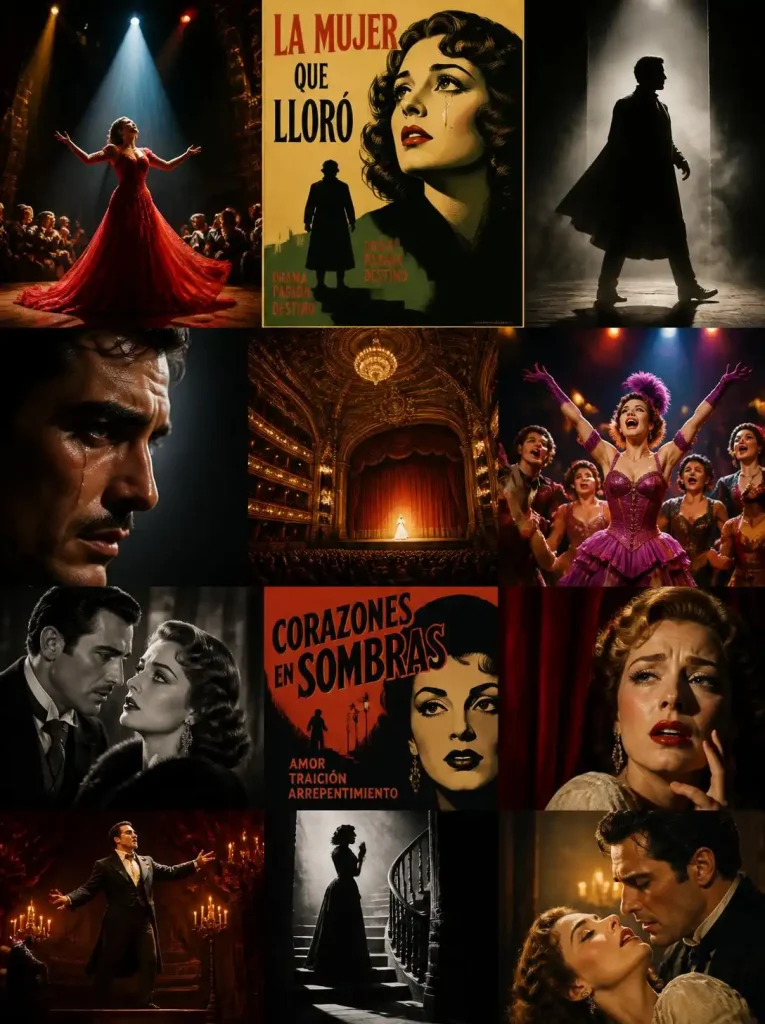
Types of Melodrama Across Different Media
Melodrama is not confined to a single medium. Over the centuries, it has adapted to fit new technologies and artistic platforms.
1. Stage Melodrama
From 19th-century British music halls to contemporary Broadway spectacles, stage melodrama utilizes exaggerated gestures, passionate speeches, and immersive soundscapes to reach the back rows of the theater.
2. The Melodrama Film Genre
When motion pictures introduced sound in the late 1920s, directors realized that camera close-ups could capture subtle facial expressions while maintaining melodramatic scale. The melodrama film flourished during Hollywood’s Golden Age:
- Douglas Sirk Classic Weepies: Films like All That Heaven Allows (1955) and Imitation of Life (1959) used vibrant Technicolor, lavish decor, and intense family conflict to critique societal hypocrisy.
- Modern Successors: Contemporary directors like Todd Haynes (Far From Heaven) and Pedro Almodóvar (All About My Mother) continue to revive the genre with rich color palettes and profound emotional depth.
For an in-depth analytical breakdown of dramatic forms and cinematic history, consult the scholarly entries at Encyclopædia Britannica, which provide extensive contextual histories of modern dramaturgy.
3. Musical Melodrama: Lorde’s Melodrama
In contemporary music, melodrama refers to albums and songs structured around grand emotional narratives. A prime modern example is singer-songwriter Lorde’s Melodrama (2017).
Lorde explicitly named her critically acclaimed second album after this genre to reflect the heightened, hyper-intense emotional landscape of youth, romance, heartbreak, and house parties. Tracks like “Green Light” and “Liability” capture the quintessential spirit of modern melodrama turning personal, intimate pain into cinematic, sweeping art.
You may also check: Narrative Writing: Tips, Examples & Guide – Start Today!
You may also like: Best Poetry: Timeless Poems You Must Read Today!
Iconic Examples of Melodrama in Literature, Stage, and Screen
To master this genre, study how iconic works across centuries have executed these tropes:
1. Literature: Wuthering Heights by Emily Brontë
Brontë’s masterpiece is a textbook example of literary melodrama. Set against the desolate Yorkshire moors, the intense, obsessive love between Heathcliff and Catherine features ghostly hauntings, generational revenge, tragic misunderstandings, and overwhelming passion.
2. Stage: The Octoroon by Dion Boucicault
Boucicault’s 1859 play combined romantic melodrama with political tension. Featuring sensational stage machinery, dramatic auctions, and tragic romance, it demonstrated how popular theater could engage with pressing social issues of its day.

A Writer’s Practical Guide: How to Incorporate Melodrama Into Your Work
If you are an author, poet, or screenwriter looking to heighten the emotional stakes of your work without crossing into unintended parody, follow these four actionable tips:
Step 1: Raise the Stakes Immediately
In melodrama, passive characters lead to flat stories. Ensure your protagonist faces an immediate, life-altering dilemma. Give your scenes urgent clock-driven pressure (a “ticking time bomb” dynamic).
Step 2: Use Sensory and Musical Language
If you’re creating prose or poetry, use word choice to create musical score. Use rhythmic cadences, vivid color images, and sharp sensory contrasts to elicit emotions in the reader.
Internal Reading Suggestion: Interested in honing your narrative voice? Read our guide on How to Develop Character Arc and Voice in Fiction for step-by-step exercises (Suggested Anchor Text: “how to develop character arc and voice in fiction”).
Step 3: Embrace Emotional Honesty
Melodrama works when the creator treats the characters’ feelings with complete sincerity. Avoid cynical detachment. If a character is grieving, let them grieve with full, uninhibited passion.
Step 4: Balance High Drama with Grounded Moments
Continuous high intensity can exhaust your audience. Intersperse intense climaxes with quieter moments of reflection, humor, or tenderness. This contrast makes the next emotional wave hit twice as hard.
Internal Reading Suggestion: To refine your scene pacing between high-action beats, check out our tutorial on Pacing Techniques for Creative Writers (Suggested Anchor Text: “pacing techniques for creative writers”).
You may also read: Creative Writing Tips: 25 Expert Hacks to Write Better Today!
You may also check: Rachel Gillig Books: Best Novels Ranked – Read Now!
Conclusion
Melodrama remains one of storytelling’s most impactful tools. By taking human feelings love, betrayal, grief, and hope and magnifying them through dramatic pacing and archetypal resonance, writers can craft stories that stay with audiences long after the final page is turned or the credits roll.
Whether you are crafting your next novel, polishing a screenplay, or composing narrative poetry, do not shy away from bold emotional stakes. Lean into the power of melodrama and connect directly with your readers’ hearts.
Frequently Asked Questions
What is the main difference between drama and melodrama?
Standard drama focuses on realistic, psychologically nuanced characters operating in plausible everyday situations. Melodrama exaggerates plot, character archetypes, and emotional intensity often using music or heightened language to generate a strong emotional reaction from the audience.
Why was music so important in early melodrama?
In 18th and 19th-century theater, music was used to cue emotional responses, foreshadow danger, and signal character entry. Because early theatrical spaces were large and noisy, orchestral underscoring helped convey story beats to the audience even if dialogue was hard to hear.
Is calling a story “melodramatic” always a negative critique?
Not at all! While critics sometimes use “melodramatic” to criticize overacting or forced plot twists, melodrama is a legitimate and highly celebrated narrative genre. Masterpieces like Emily Brontë’s Wuthering Heights, Douglas Sirk’s films, and Lorde’s concept album Melodrama demonstrate how heightened emotion creates timeless art.
