


If you want literature that asks you to slow down, listen closely, and look beneath the surface, William Faulkner Books are an excellent place to begin. His novels and stories explore memory, family, race, class, violence, love, guilt, and the complicated history of the American South.
But where should you start? Faulkner’s reputation can make his work seem intimidating, especially when readers encounter long sentences, shifting perspectives, or stream-of-consciousness narration. The good news is that you do not have to read everything in publication order-or begin with his most challenging novel.
This guide explores the major William Faulkner novels, explains what makes his writing distinctive, and helps you choose a starting point based on your reading interests. Whether you are a lifelong literary reader, a student, poet, author, or simply curious about this influential William Faulkner writer, there is a Faulkner book waiting for you.
Table Of Contents
Who Was William Faulkner?
William Faulkner (1897–1962) was an American novelist and short-story writer associated strongly with Mississippi and the American South. He created the fictional Yoknapatawpha County, a recurring setting that became the imaginative landscape for many of his works.
Faulkner received the Nobel Prize in Literature for 1949, with the award recognizing his “powerful and artistically unique contribution to the modern American novel.” He formally received the prize in 1950.
His career was remarkably varied. He wrote novels, short stories, poetry, essays, screenplays, and other works. According to the Nobel Foundation, he wrote 13 novels and many short stories, having begun his literary career as a poet.
You may also check – Natasha Preston Books: Start Your Next Gripping Read!
You may also like – Best Dystopian Novels: Dive Into Unforgettable Worlds!
His fiction is particularly known for:
- Multiple narrators and perspectives
- Stream-of-consciousness narration
- Nonlinear approaches to time
- Complex family histories
- Southern settings and social structures
- Questions surrounding race and class
- Long, highly descriptive sentences
- Characters shaped by memory and inherited history
Why Are William Faulkner Books Still Worth Reading?
Faulkner’s books are not simply historical artifacts. Their questions remain literary and human: How does the past shape the present? Can people escape family expectations? What happens when communities preserve old social structures? How reliable is memory?
One reason his fiction continues to attract readers is its unusual treatment of time.
Instead of presenting events as a simple beginning-to-end sequence, Faulkner often allows memories, impressions, conversations, and historical events to overlap. A character might remember something that happened decades earlier while reacting to an event in the present.
That approach can initially feel confusing. It can also become deeply immersive once you understand what Faulkner is attempting.
The Library of Congress includes The Sound and the Fury in its Books That Shaped America exhibition and notes its use of multiple narrators and stream-of-consciousness narration.
For writers, this makes Faulkner particularly valuable. His books demonstrate that narrative structure does not have to imitate ordinary chronological experience.
You also check – Famous Writers In India: Discover Literary Legends!
You also read – Barbara Kingsolver Books: Discover Where to Start!
10 William Faulkner Books to Explore
Rather than treating these books as a rigid ranking, think of the following list as a reading map. Each title offers a different entry into Faulkner’s fictional world.
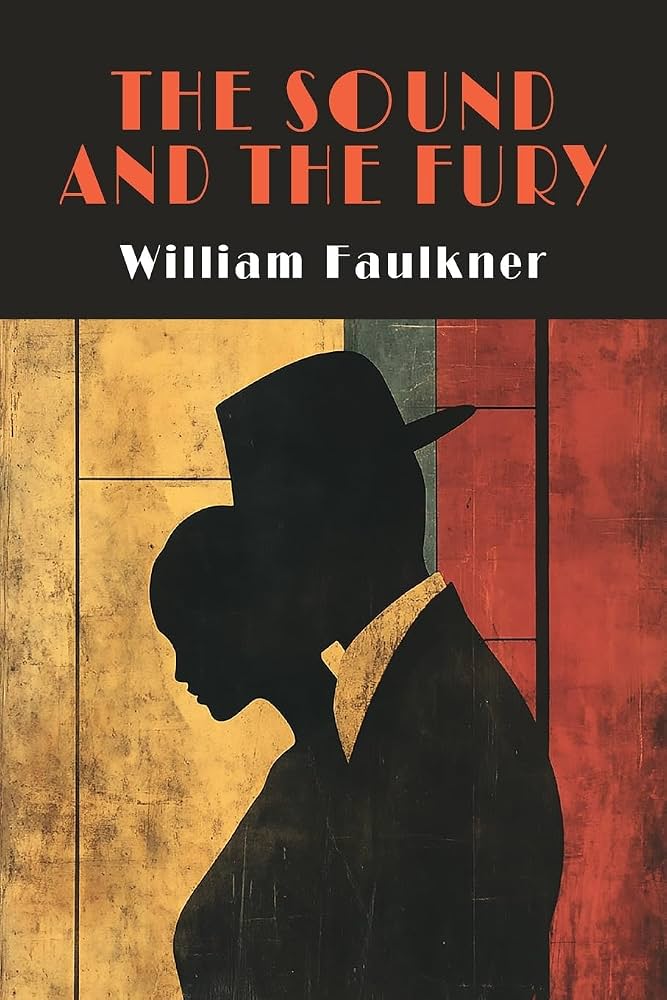
1. The Sound and the Fury
Published in 1929, The Sound and the Fury is one of Faulkner’s defining novels.
The story centers on the Compson family, a once-prominent Southern family experiencing decline. What makes the novel especially distinctive is its structure: the story unfolds through different perspectives, requiring readers to reconstruct events from fragmented consciousness.
The first section, narrated through Benjy Compson’s perspective, can be especially challenging because conventional chronological order largely disappears.
Yet that difficulty serves a purpose. The novel asks you to experience consciousness rather than simply receive information about a character.
The Library of Congress describes the novel as being divided into four parts, with different narrators, and highlights its stream-of-consciousness technique.
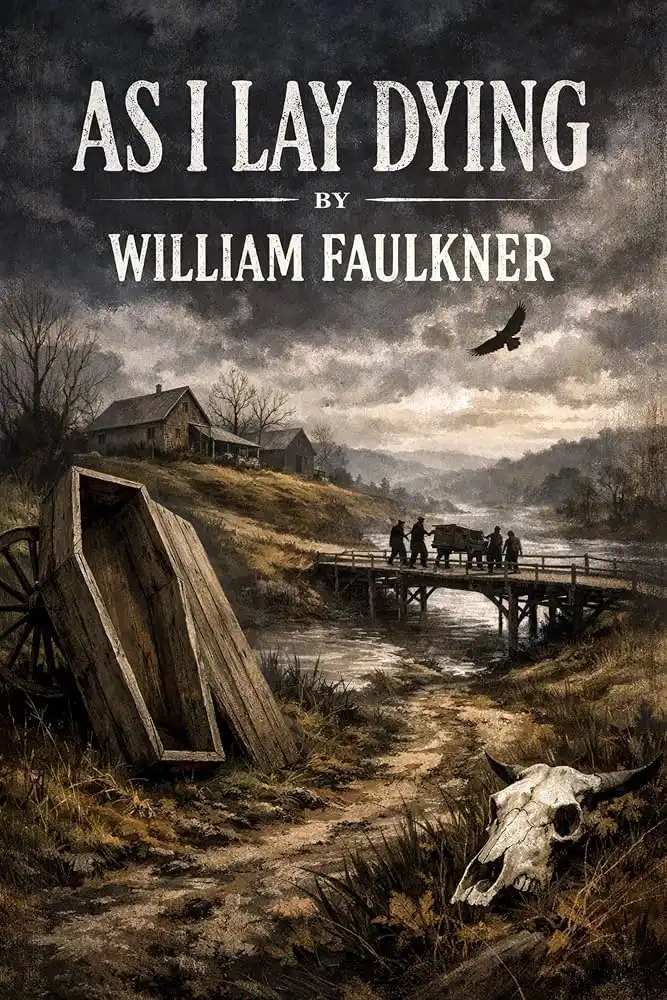
2. As I Lay Dying
If you want to begin with Faulkner but feel nervous about The Sound and the Fury, As I Lay Dying can provide another fascinating introduction.
The As I Lay Dying book follows the Bundy family as they attempt to transport the body of Addie Bundren to the burial place she requested.
The premise sounds straightforward. The storytelling is anything but.
The novel moves through numerous perspectives, allowing different family members to reveal their personalities, motivations, frustrations, and private thoughts.
The result is simultaneously tragic, strange, darkly humorous, and psychologically revealing.
What makes this novel especially useful for writers is its lesson in characterization. Faulkner does not simply tell you who these people are. Their voices reveal them.
You may also check – Realistic Fiction Books: Find What to Read Next!
You may also read – John Boyne Books: Complete Reading Guide—Explore Now!
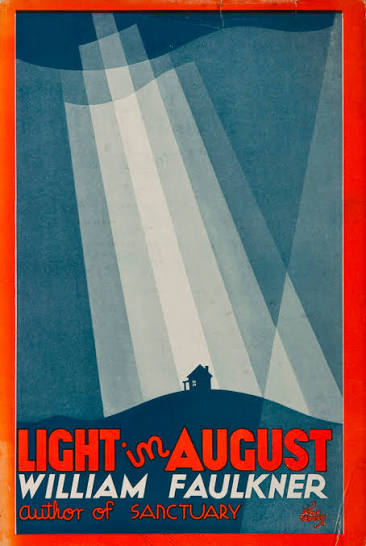
3. Light in August
Light in August combines personal identity with larger questions about race, community, religion, prejudice, and belonging.
One of its central figures is Joe Christmas, a character whose uncertain racial identity becomes a source of conflict within the story.
Faulkner uses individual lives to examine the social pressures surrounding them. The result is a novel that is both intensely personal and socially expansive.
The Nobel Foundation’s biographical material specifically identifies racial prejudice as a major concern in the novel and discusses how that prejudice becomes destructive when internalized.
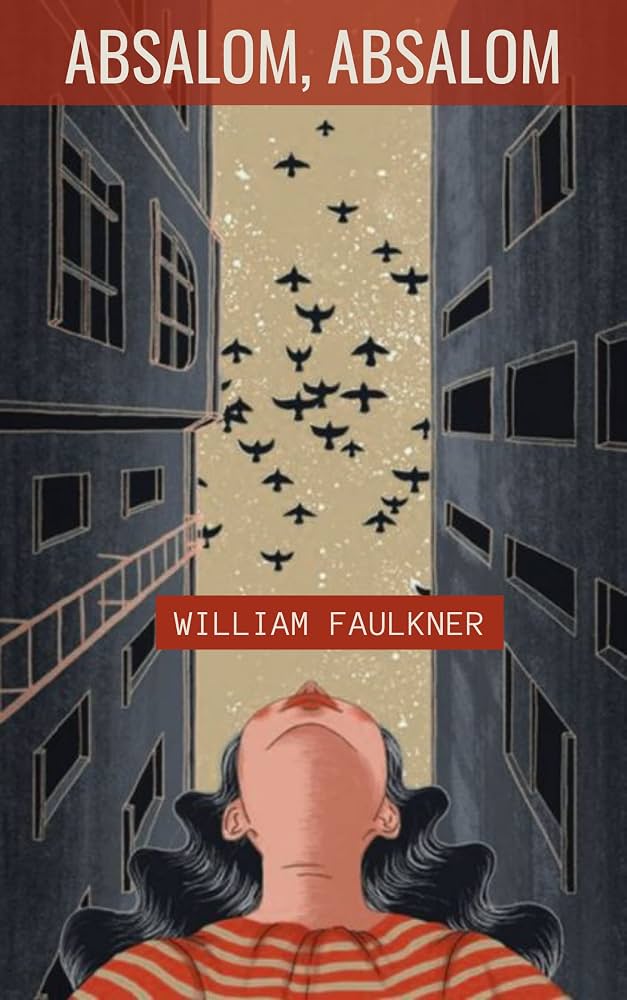
4. Absalom, Absalom!
If you enjoy stories about ambition, family secrets, inheritance, and the construction of history, Absalom, Absalom! deserves your attention.
The novel follows the rise and collapse of Thomas Sutpen and the family structures surrounding him. However, the story is not presented as one clean historical account.
Instead, different characters attempt to reconstruct what happened.
That makes the novel particularly interesting for anyone who writes fiction. History becomes something characters interpret rather than simply something the narrator reports.
The Library of Congress’s National Library Service describes the novel as reconstructing the rise and fall of a nineteenth-century Southern family through several narrators with differing perspectives.
5. A Rose for Emily
Technically a short story rather than a novel, A Rose for Emily is one of the most frequently discussed pieces associated with Faulkner.
The A Rose for Emily book phrase is sometimes used casually in searches, but readers should know that A Rose for Emily is a short story, not a standalone novel.
The story follows Emily Grierson, a woman whose life becomes increasingly mysterious to the townspeople around her.
Faulkner uses the town’s collective perspective to create distance between Emily and the reader. Instead of receiving her complete story directly, we assemble it through observations, gossip, assumptions, and revelations.
That structure creates one of the story’s most important effects: the reader becomes an investigator.
You may also like – Alex Aster Books in Order: Find Your Next Read!
You may also read – Michael Crichton Books in Order: Start Reading Now!
6. Sanctuary
Published in 1931, Sanctuary is considerably darker than some of Faulkner’s other major works.
The novel explores violence, exploitation, morality, and social corruption. Its disturbing subject matter makes it a book that requires more emotional preparation than some of his other works.
Yet it also demonstrates Faulkner’s ability to create tension around morally complicated characters.
According to the Nobel Foundation’s biographical account, Sanctuary centers on Temple Drake and examines her degradation within a brutal social environment.
7. The Hamlet
The Hamlet begins the Snopes trilogy, followed later by The Town and The Mansion.

Instead of concentrating on one collapsing aristocratic family, these books examine the rise of the Snopes family and its influence within the community.
The trilogy offers a broader view of Faulkner’s fictional society and his interest in changing economic and social power.
The Nobel Foundation identifies The Hamlet as the first part of the trilogy and notes that the later novels trace the Snopes family’s rise to power and wealth.
8. The Reivers
If the darker side of Faulkner’s work seems overwhelming, The Reivers offers a different experience.
Published in 1962, the year Faulkner died, it is one of his more humorous works. The Nobel Foundation describes it as his last work and notes similarities to Mark Twain’s Adventures of Huckleberry Finn.
This makes The Reivers an interesting reminder that Faulkner’s literary range extends beyond tragedy, decay, and psychological darkness.
You may also read – David Baldacci Books in Order: Explore the Thrillers!
You may also check – Jack Reacher Series: Complete Book Order—Start Reading!
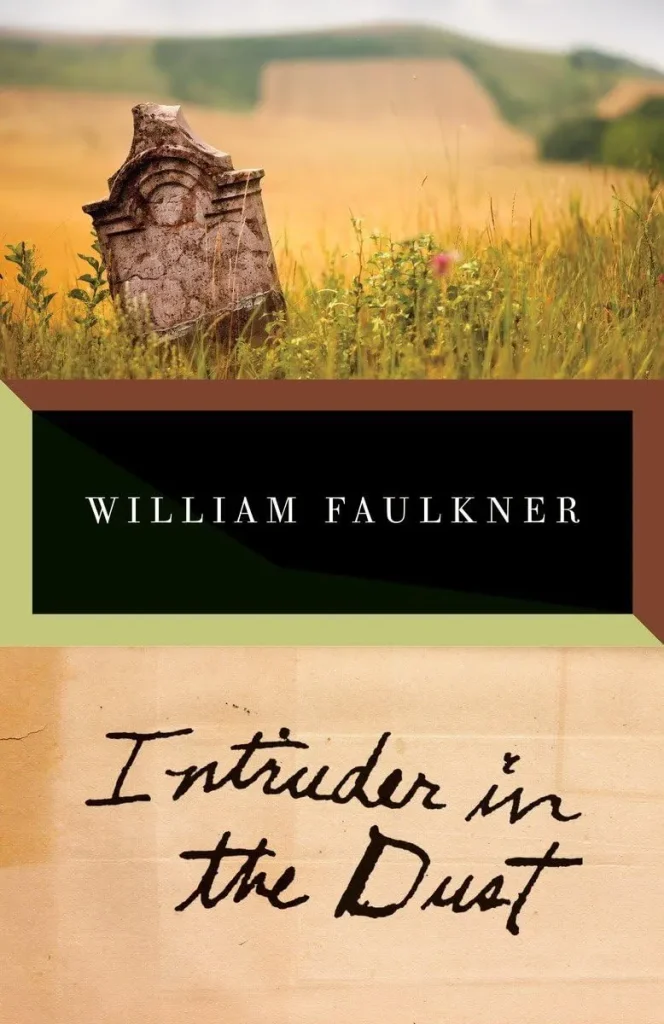
9. Intruder in the Dust
Intruder in the Dust turns toward racial injustice and the American legal and social environment.
The story revolves around Lucas Beauchamp, a Black man accused of murder, and the investigation surrounding the accusation.
The novel is important when considering Faulkner’s engagement with race. The Nobel Foundation identifies it as one of his most direct treatments of the relationship between Black and white communities.
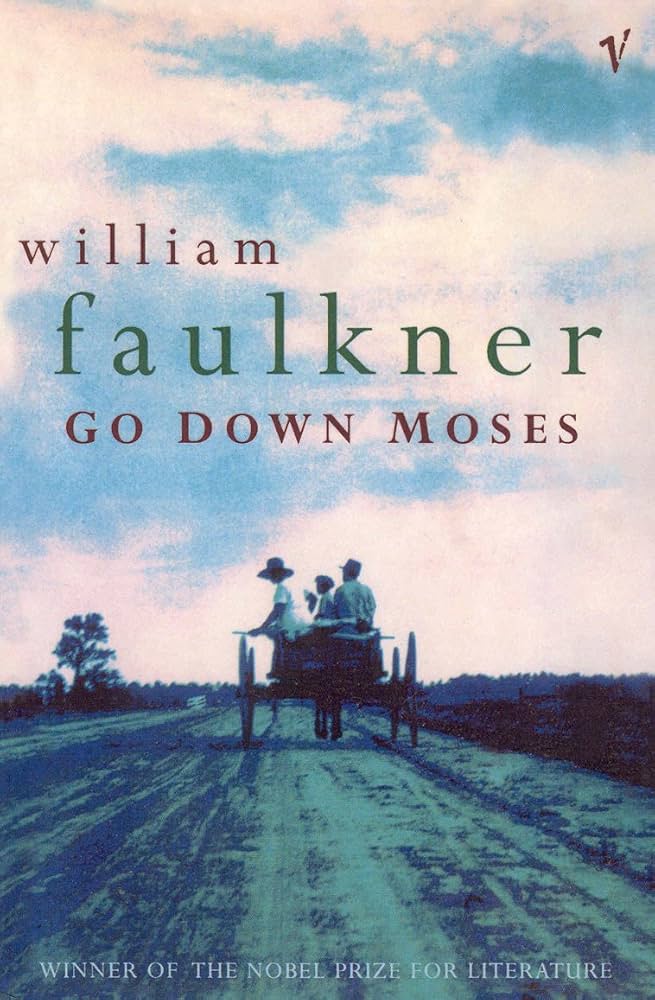
10. Go Down, Moses
Go Down, Moses occupies an interesting space between novel and linked-story collection. Its interconnected narratives explore the McCaslin family, land, inheritance, race, and generational history.
The book is particularly rewarding for readers who enjoy discovering connections across multiple stories rather than following one continuous plot.
William Faulkner’s Influence and Literary Legacy
Faulkner’s influence reaches beyond the Southern literary tradition.
His experiments with voice, time, perspective, and consciousness helped establish possibilities for the modern novel.
His fictional geography also offers a lasting model for world-building. Writers can create imaginary communities that feel as historically dense and interconnected as real places.
His work also influenced writers outside the United States. Nobel’s material on Mo Yan, for example, records Mo Yan describing Faulkner as an important influence in developing his own fictional territory.
Faulkner’s legacy also extends into poetry. Before becoming famous for his novels, he published poetry, including The Marble Faun in 1924. The Poetry Foundation notes his early interest in poetry and lists several of his poems and biographical details.
This is a useful reminder for writers: literary careers rarely develop in a perfectly straight line.
You may also read – Comic Book Creators: Meet the Top 10 Legends – Explore Now!
You may also like – Dark Fantasy Novels: 15 Must-Reads—Dive In Now!
Conclusion
The most rewarding way to approach William Faulkner Books is to stop thinking of them as difficult classics you are supposed to admire and start treating them as experiments in how stories can be told.
Begin with a short story if you want an accessible introduction. Choose As I Lay Dying for a powerful family narrative. Move to Light in August for questions of identity and society. When you are ready for a more demanding literary experience, open The Sound and the Fury or Absalom, Absalom!.
And if you are an author or poet, read Faulkner not only for his stories but also for his craft. Watch how he handles voice, memory, setting, history, and perspective.
Pick the Faulkner book that matches your mood, open the first page, and give yourself permission to read slowly. Your next great literary discovery may be waiting there.
