

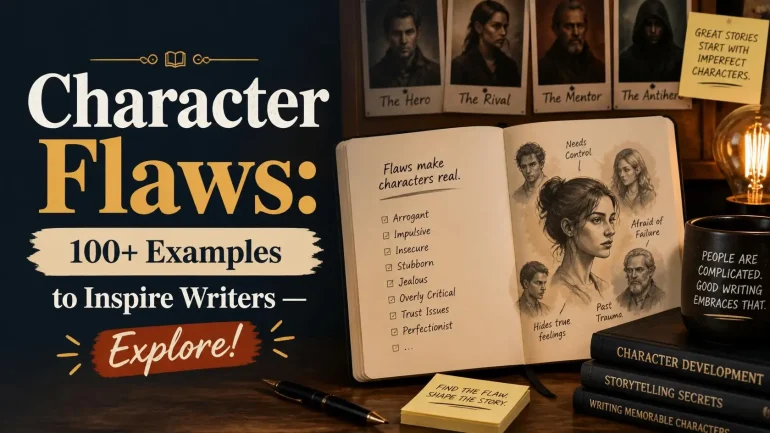
Perfect, flawless heroes can quickly become boring. Imagine reading about a protagonist who always makes the right choice, has unlimited abilities, and never wrestles with self-doubt. Without meaningful character flaws, the story may feel predictable and lack emotional depth.
Readers connect with characters who make mistakes, face weaknesses, and grow through challenges making imperfections essential to creating a compelling protagonist.
Understanding character flaws is essential for any storyteller. A well-designed character weakness creates conflict, drives plot development, and delivers a satisfying narrative arc.
This guide explores the anatomy of character flaws, provides a categorized list of over 100 character flaws examples, and offers strategies to transform stock archetypes into resonant, three-dimensional characters.
Table Of Contents
- What is a Character Flaw?
- The Three Categories of Character Flaws
- The Master Character Flaw List: 100+ Examples for Writers
- Category 1: Ego & Pride
- Category 2: Emotion & Temperament
- Category 3: Fear & Insecurity
- Category 4: Moral & Ethical Distortions
- Category 5: Social & Interpersonal Failings
- Category 6: Cognitive & Decision-Making Blind Spots
- Category 7: Behavioral & Physical Constraints
- Category 8: Archetypal & Tragic Hero Flaws
- Famous Examples of Character Flaws in Literature and Film
- How to Choose the Right Character Flaw for Your Story
- How Character Flaws Drive Character Arcs
- Conclusion – Character Flaws
- Frequently Asked Questions
What is a Character Flaw?
A character flaw is an imperfection, limitation, psychological vulnerability, or moral failing that hinders a character in their journey. Unlike external obstacles such as a villain, a natural disaster, or a ticking clock a flaw originates from within.
External Obstacle (The Wall) + Internal Flaw (Fear of Heights) = High-Stakes Narrative Conflict
In creative writing, character faults serve three distinct storytelling functions:
- Humanization: Flaws make characters relatable. Readers recognize their own anxieties, hypocrisies, and blind spots in the characters on the page.
- Plot Propulsion: External events react to internal choices. When a protagonist makes a bad decision due to a personal defect, it drives the plot forward.
- Internal Arc (Theme): The journey of a story often centers on whether a character can acknowledge, overcome, or succumb to their primary flaw.
You may also like – Write That Damn Book! by LitGleam | Start Writing Today | LitGleam
You may also check – Write Your Life: Turn Your Memories Into a Legacy With My Story, My Legacy
The Three Categories of Character Flaws
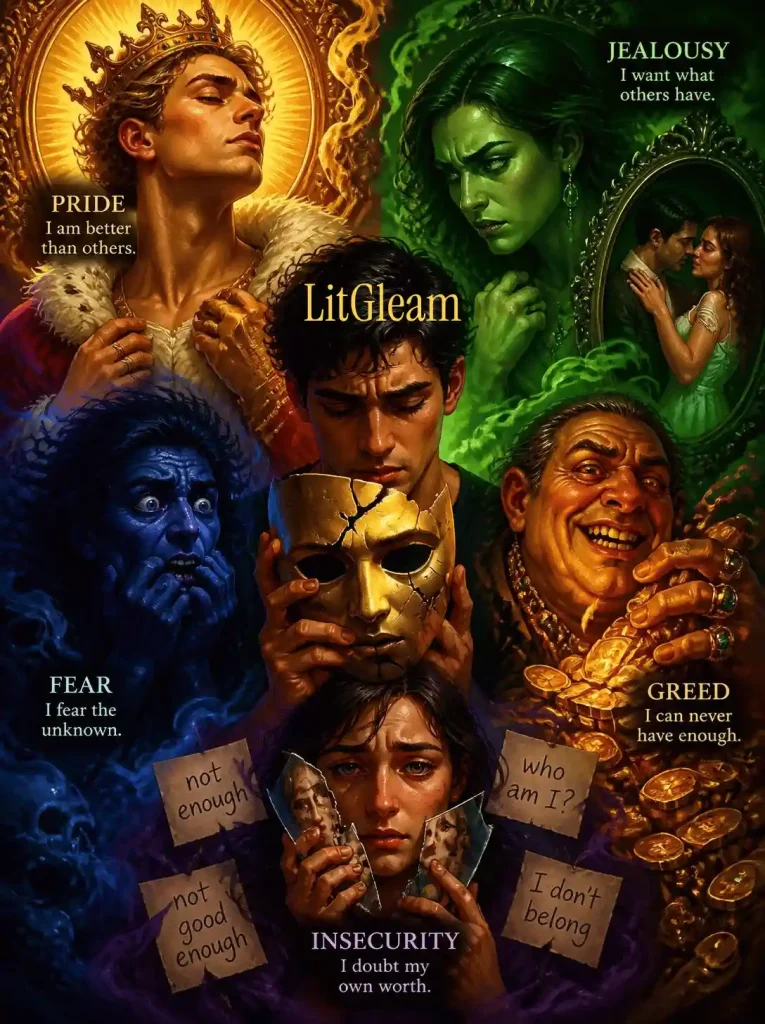
To build a balanced character profile, categorize flaws by their severity and impact on the story. Flaws fall into three main tiers:
1. Minor Flaws (Quirks & Color)
Minor flaws do not drive the main plot, but they give a character texture. They make a persona feel distinct without disrupting their ability to function effectively.
- Examples: Clumsiness, nail-biting, habitual late arrival, mild cynicism, talking too fast.
2. Major Flaws (Core Conflict Drivers)
Major flaws actively impede the character’s goal and shape their relationships. These flaws in personality create immediate friction in every scene.
- Examples: Chronic lying, deep-seated distrust, explosive temper, extreme selfishness, crippling self-doubt.
3. Fatal Flaws (Hamartia)
A fatal flaw is a profound moral or psychological defect that threatens to destroy the character or those around them. Classical drama refers to this as hamartia the primary trait responsible for the traits of a tragic hero.
- Examples: Blind ambition, extreme hubris, unyielding thirst for vengeance, pathological jealousy.
The Master Character Flaw List: 100+ Examples for Writers
Use this comprehensive character flaw list to brainstorm internal conflicts for your protagonists, antagonists, and supporting cast.
Category 1: Ego & Pride
- Hubris: Arrogant pride that leads a character to overestimate their abilities and dismiss warnings.
- Narcissism: An excessive focus on self-importance and a desperate need for admiration.
- Vanity: Fixation on physical appearance, status, or public image.
- Elitism: Looking down on others based on social class, intelligence, or standing.
- Self-Righteousness: Believing one’s moral stance is infallible, leading to intolerance of others.
- Pretentiousness: Affecting importance or talent to impress people.
- Condescension: Treating others as inferior or foolish.
- Stubbornness: Refusing to change an opinion or course of action despite clear evidence.
- Defensiveness: Overreacting to valid criticism out of insecure pride.
- Inflexible Rigidity: Refusing to adapt when circumstances demand change.
You may also read – Dune Books in Order: Complete Reading Guide – Start Now!
You may also check – Percy Jackson Books in Order: Read the Series Now!
Category 2: Emotion & Temperament
- Volatilities/Short Temper: Exploding into anger over minor provocations.
- Melancholy: A persistent state of gloom that paralyzes action.
- Jealousy: Resenting others for their achievements, possessions, or relationships.
- Envy: Coveting what others have to the point of bitterness.
- Apathy: Complete indifference toward the suffering or outcomes of others.
- Hypersensitivity: Taking every neutral comment as a personal attack.
- Coldness: Emotional detachment that prevents genuine connection.
- Passivity: Refusing to take a stand, letting life happen to them.
- Cruelty: Deriving satisfaction from the physical or emotional discomfort of others.
- Pessimism: Viewing every scenario with doom, discouraging others from trying.
Category 3: Fear & Insecurity
- Cowardice: Shrinking from physical or emotional danger when action is required.
- Paranoia: Unwarranted suspicion that others are actively planning harm.
- Imposter Syndrome: Persistent belief that one is a fraud who will inevitably be exposed.
- Need for Approval: Sacrificing personal ethics to be accepted by a group.
- Abandonment Fear: Smothering loved ones out of terror that they will leave.
- Fear of Intimacy: Pushing people away to avoid emotional vulnerability.
- Perfectionism: Refusing to complete or share work because it isn’t flawless.
- Hypochondria: Fixation on imaginary illnesses, obstructing daily choices.
- Risk Aversion: Refusing to take necessary leaps forward out of fear of failure.
- Possessiveness: Seeking total control over people or outcomes to feel secure.
Category 4: Moral & Ethical Distortions
- Deceitfulness: Habitually lying, masking truth, or misrepresenting facts.
- Greed: Unquenchable desire for wealth, power, or material goods.
- Hypocrisy: Demanding moral standards from others while failing to observe them personally.
- Cruelty/Sadism: Enjoys inflicting pain or discomfort.
- Manipulativeness: Exploiting others’ emotions and weaknesses for personal gain.
- Disloyalty: Abandoning friends, allies, or causes when convenient.
- Vindictiveness: Holding grudges and prioritizing revenge over resolution.
- Corruptibility: Easily bribed, swayed, or compromised ethically.
- Opportunism: Exploiting situations without regard for moral principles.
- Selfishness: Prioritizing personal convenience over the basic needs of others.
You may also read – Indian Freedom Fighters: 25 Heroes to Know & Honor!
You may also like – Jack Carr Books in Order: Complete List – Explore!
Category 5: Social & Interpersonal Failings
- Tactlessness: Speaking the truth without filter, causing unnecessary harm.
- Gossip: Spreading rumors and undermining trust within a community.
- Over-Dependence: Relying on someone else for basic decision-making and emotional validation.
- Secretiveness: Withholding critical information, creating artificial barriers.
- Controlling Behavior: Dictating how others should live, work, or think.
- Judgementalness: Forming quick, harsh conclusions about others’ character.
- Naivety: Blindly trusting untrustworthy individuals despite obvious warnings.
- Aloofness: Standing apart, appearing superior or detached from collective efforts.
- Sycophancy: Flattering authority figures insincerely to gain favors.
- Bluntness: Using honesty as a weapon rather than a tool for clarity.
Category 6: Cognitive & Decision-Making Blind Spots
- Impulsivity: Acting on instinct without evaluating consequences.
- Indecisiveness: Endless analysis that leads to inaction (paralysis by analysis).
- Naivete: Overlooking real-world dangers due to an overly idealistic worldview.
- Gullibility: Believing false information without verification.
- Short-Sightedness: Focusing on immediate rewards while ignoring long-term ruin.
- Over-Thinking: Creating complex problems that do not exist in reality.
- Obsessiveness: Fixing on an idea or goal to the exclusion of health and relationships.
- Tunnel Vision: Ignoring alternative solutions or warning signs once a path is chosen.
- Dogmatism: Sticking to rigid beliefs regardless of new evidence.
- Rationalization: Inventing excuses to justify unethical actions.
Category 7: Behavioral & Physical Constraints
- Recklessness: Disregarding safety, risking self and others unnecessarily.
- Laziness: Avoiding effort even when responsibilities are critical.
- Procrastination: Postponing important work until crisis hits.
- Addiction: Dependent on substances or behaviors, impairing judgment.
- Compulsive Behavior: Repeating rituals or actions driven by anxiety.
- Workaholism: Sacrificing health and relationships for productivity.
- Hedonism: Pursuing immediate physical pleasure regardless of long-term cost.
- Sloppiness: Neglecting detail, causing mistakes in execution.
- Wastefulness: Squandering resources, money, or time without care.
- Restlessness: Inability to settle down, abandoning projects mid-way.
Category 8: Archetypal & Tragic Hero Flaws
- Over-Protectiveness: Smothering others, denying them independence under the guise of care.
- Martyr Complex: Sacrificing self-interest to feel morally superior, building resentment.
- Blind Loyalty: Supporting a corrupt leader or cause out of devotion.
- Savior Complex: Believing one must fix everyone else’s problems, ignoring self-growth.
- Misguided Idealism: Pursuing an abstract perfection that causes real-world harm.
- Fatalism: Believing outcomes are predetermined, surrendering personal agency.
- Excessive Duty: Placing honor or rules above compassion or survival.
- Self-Sacrifice to a Fault: Giving up everything until there is nothing left to give.
- Rigid Code of Honor: Following rules so strictly that it leads to tragedy.
- Hubristic Ambition: Seeking power or success at the cost of humanity.
You may also like – Literature Festival: Top Events to Explore Now!
You may also read – Shatter Me Series: Complete Reading Order – Read Now!

Famous Examples of Character Flaws in Literature and Film
Analyzing established works illustrates how internal defects drive iconic narratives.
1. Oedipus (Oedipus Rex by Sophocles) – Hubris
- The Flaw: Oedipus possesses excessive pride and absolute confidence in his ability to outsmart fate.
- The Consequence: His refusal to heed warnings from prophets directly fulfills the prophecy he sought to avoid. This remains the classic blueprint for the traits of a tragic hero.
2. Emma Woodhouse (Emma by Jane Austen) – Meddlesome Arrogance
- The Flaw: Emma is convinced she understands human nature better than anyone else, leading her to play matchmaker without understanding real feelings.
- The Consequence: She misinterprets relationships, hurts her friends, and nearly loses the man she loves.
3. Walter White (Breaking Bad) – Pride and Ego
- The Flaw: Walter begins with a desire to secure his family’s financial future, but his core flaw is a deep-seated pride and resentment toward his past failures.
- The Consequence: He refuses genuine financial assistance from former business partners, choosing instead to build a drug empire to satisfy his ego.
4. Katniss Everdeen (The Hunger Games by Suzanne Collins) – Emotional Detachment and Distrust
- The Flaw: Raised in extreme trauma, Katniss struggles to trust anyone or process her own emotions.
- The Consequence: She frequently misreads allies like Peeta and Haymitch, isolating herself when she needs support most.
How to Choose the Right Character Flaw for Your Story
Adding random flaws to a character sheet will not create a compelling character. Flaws must integrate organically with your world, plot, and character backstory.
Step 1: Link the Flaw to the Lie They Believe
Every flawed character holds a core misbelief about themselves or the world often called “The Lie.” The flaw is the external symptom of that internal misbelief.
- The Lie: “I am only worthy of love if I am successful.”
- The Flaw: Workaholism, coldness, ruthless ambition.
Step 2: Tie the Flaw to the Backstory (The Ghost/Wound)
Flaws rarely appear out of nowhere. They develop as defense mechanisms against past pain.
- The Ghost: A character was betrayed by their business partner in the past.
- The Flaw: Paranoia, micro-management, refusal to delegate.
Step 3: Ensure the Flaw Opposes the Plot Goal
For maximum tension, select a flaw that directly interferes with what the character needs to accomplish in the climax.
- Plot Goal: A detective must lead a team to catch a serial killer.
- Opposing Flaw: Extreme hyper-independence and refusal to trust subordinates.
You may also like – Best Short Story: 10 Must-Read Classics – Explore!

You may also check – Best English Poem: 10 Timeless Classics – Read Now!
How Character Flaws Drive Character Arcs
A character arc describes how a protagonist changes over the course of a story. Their relationship with their flaw defines the structure of that arc.
Positive Arc: Acknowledges Flaw ──> Overcomes Wound ──> Achieves Growth
Negative Arc: Ignores Flaw ──> Embraces Lie ──> Tragic Downfall
Static Arc: Resists Flaw ──> Holds Values ──> Changes Environment
1. The Positive Change Arc
The character begins with a major internal defect, encounters challenges that highlight this defect, hits rock bottom because of it, and eventually overcomes the flaw to succeed.
- Example: A selfish character learns to risk everything for someone else.
2. The Negative (Tragic) Arc
The character refuses to confront their defect. As pressure increases, they double down on their bad behavior, leading to their ultimate downfall.
- Example: An ambitious leader lets their hubris destroy their relationships and their kingdom.
3. The Flat Arc
The character does not change significantly. Instead, they possess a core truth, and their internal strength is tested by a flawed world.
- Example: Sherlock Holmes or James Bond. Their minor flaws remain intact, while their core skills resolve external conflict.
Conclusion – Character Flaws
Character flaws turn dynamic ideas into unforgettable human stories. By giving your characters real internal defects, you create room for meaningful growth, authentic conflict, and resonant themes.
Take your favorite character draft, review the character flaw list above, and ask yourself: What is my character’s biggest internal blind spot? Once you identify that flaw, build your plot around testing it.
Frequently Asked Questions
What is the difference between a character flaw and a tragic flaw?
A character flaw is any internal defect or bad habit that causes minor or major conflict in a story. A tragic flaw (hamartia) is a specific, deep-seated defect such as extreme hubris or blind ambition that directly leads to the protagonist’s ultimate downfall or ruin.
Can a hero have more than one character flaw?
Yes. Multi-dimensional characters often have a primary major flaw (such as distrust) accompanied by secondary minor flaws or quirks (such as a bad temper or impatience). However, avoid giving a character too many major flaws, as this can confuse the primary narrative arc.
How do I make a flawed character likable?
Give them a clear motivation, show their vulnerability, or ensure they possess compensating positive traits like loyalty, humor, or deep love for someone else. Readers don’t need a character to be perfect; they just need to understand why the character acts the way they do.
